
The three-year rule says that if the insured gives away a life insurance policy on their own life and dies within three years of the transfer, the entire death benefit is pulled back into their taxable estate as if the gift never happened. It sits at section 2035(a) of the Internal Revenue Code and it applies to the release of any incident of ownership, not only to an outright change of owner.
For most American households in 2026 this rule is irrelevant, and it is worth saying that at the top. Under the law enacted in 2025 the federal basic exclusion amount is $15 million per person, indexed thereafter, so an estate would have to be very large before a pulled-back death benefit produced any tax at all. Confirm the current figure with your CPA, because this number has changed repeatedly and is scheduled to keep moving.
Where it still bites is in three narrower places: estates near a state threshold, families who set up an irrevocable life insurance trust and moved an existing policy into it, and anyone who tries to unwind an insurance ownership problem late. This page looks at whose interest the rule protects and who ends up paying for it, and it flags the one exception that matters most to readers of this site. It is education, not tax advice.
In This Article
What Counts As A Transfer, And What An Incident Of Ownership Is
The rule is broader than a change of the owner line on a form.
An incident of ownership is any right in the policy that has economic value to the owner: the right to change the beneficiary, to surrender or cancel the policy, to assign it, to pledge it as collateral, or to borrow against the cash value. Give up any of those within three years of death and the section can apply.
That breadth catches people. A grandmother who keeps ownership but irrevocably assigns her right to change the beneficiary has released an incident of ownership. A business owner who transfers a policy to the company but retains a right to borrow against it may not have transferred enough. Conversely, a person who holds no rights at all — because a trust bought the policy from inception — never had an incident of ownership to release, and the rule can never apply.
That last point is the entire reason estate planners prefer to have an irrevocable life insurance trust apply for and own a policy from day one rather than have the insured buy it and transfer it later. There is no three-year exposure on a policy the insured never owned. If a new policy is part of the plan, this is the single most valuable sequencing decision available, and it costs nothing to get right at the start.
Who The Rule Protects
The Treasury, straightforwardly, and it is a defensible design rather than a trap.
Life insurance is uniquely suited to deathbed planning. A policy’s value for gift tax purposes while the insured is alive — broadly the interpolated terminal reserve plus unearned premium, reported by the carrier on Form 712, the Life Insurance Statement — is usually a small fraction of the death benefit. Without section 2035, a person with a terminal diagnosis could transfer a $5 million policy at a gift value of a few hundred thousand dollars and remove the entire death benefit from the estate for a fraction of the tax.
The three-year window is a rough proxy for deathbed intent. It is not a perfect one, and it catches plenty of transfers made for entirely ordinary reasons, but Congress chose a bright line over a facts-and-circumstances inquiry.
There is a companion provision worth knowing. Section 2035(b) pulls gift tax actually paid on gifts made within three years of death back into the gross estate as well. That is the so-called gross-up rule, and it exists to stop a related maneuver.
Who Pays When It Applies
The beneficiaries pay. If the estate is taxable, a pulled-back death benefit is taxed at the estate rate, which is 40 percent at the top as of 2026. On a $2 million policy that is $800,000 of tax that the family expected not to owe.
The trustee bears the fiduciary anxiety. When an existing policy has been transferred into an irrevocable life insurance trust, the trustee is holding an asset with a known three-year survival requirement. That is a real administrative burden: the trustee must keep records of the transfer date, keep the trust’s Crummey notices current, and understand that a death inside the window changes the tax reporting entirely.
The estate’s executor pays the compliance cost. The pulled-back proceeds are reported on Form 706, the estate tax return, due nine months after death with a six-month extension available. The carrier’s Form 712 is filed with it. An executor who does not know about the transfer cannot report it correctly, which is why the transfer documents belong in the same file as the will.
A note on the states. Several states impose their own estate or inheritance taxes with thresholds far below the federal figure, and a few apply their own look-back to transfers made shortly before death. Pennsylvania’s one-year rule for its inheritance tax is the example most often cited. Ask a local attorney what your state does rather than assuming the federal analysis is the whole story.
| Transfer type | Caught by the three-year rule? | Why |
|---|---|---|
| Insured gifts a policy to a child | Yes, if death occurs within three years | Release of incidents of ownership by the insured |
| Insured transfers a policy to an ILIT | Yes, if death occurs within three years | Same; the trust does not change the analysis |
| ILIT applies for and owns the policy from inception | No | The insured never held incidents of ownership |
| Bona fide sale for full and adequate consideration | No | Statutory exception; value received equals value given up |
| Sale to a relative at a token price | Partly | Treated as part gift; the gift portion is exposed |
The Exception That Matters Most Here: A Bona Fide Sale
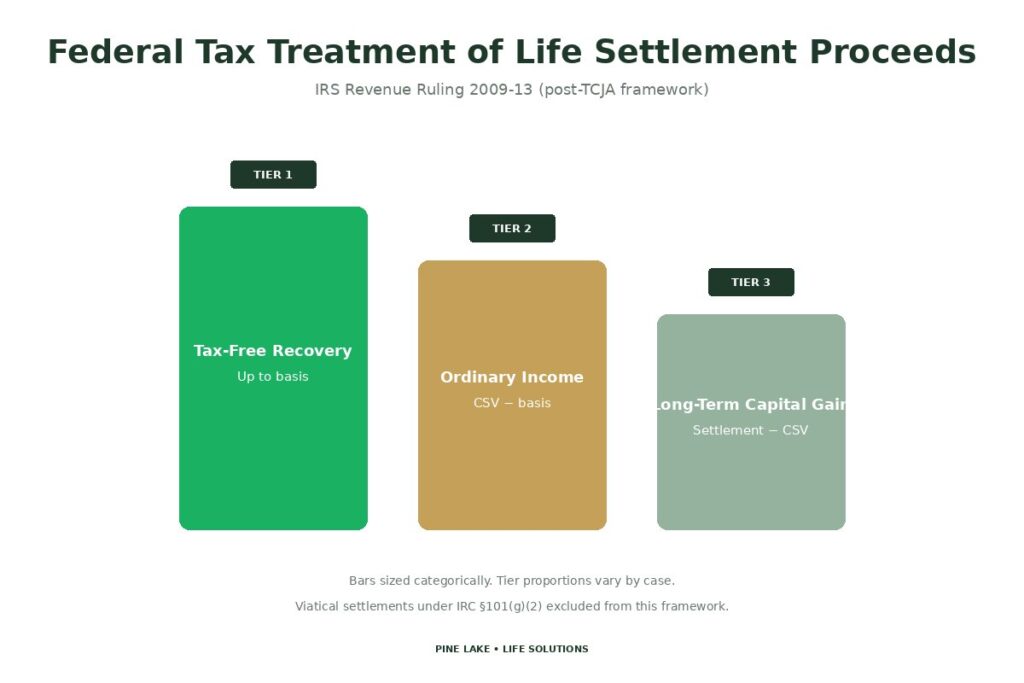
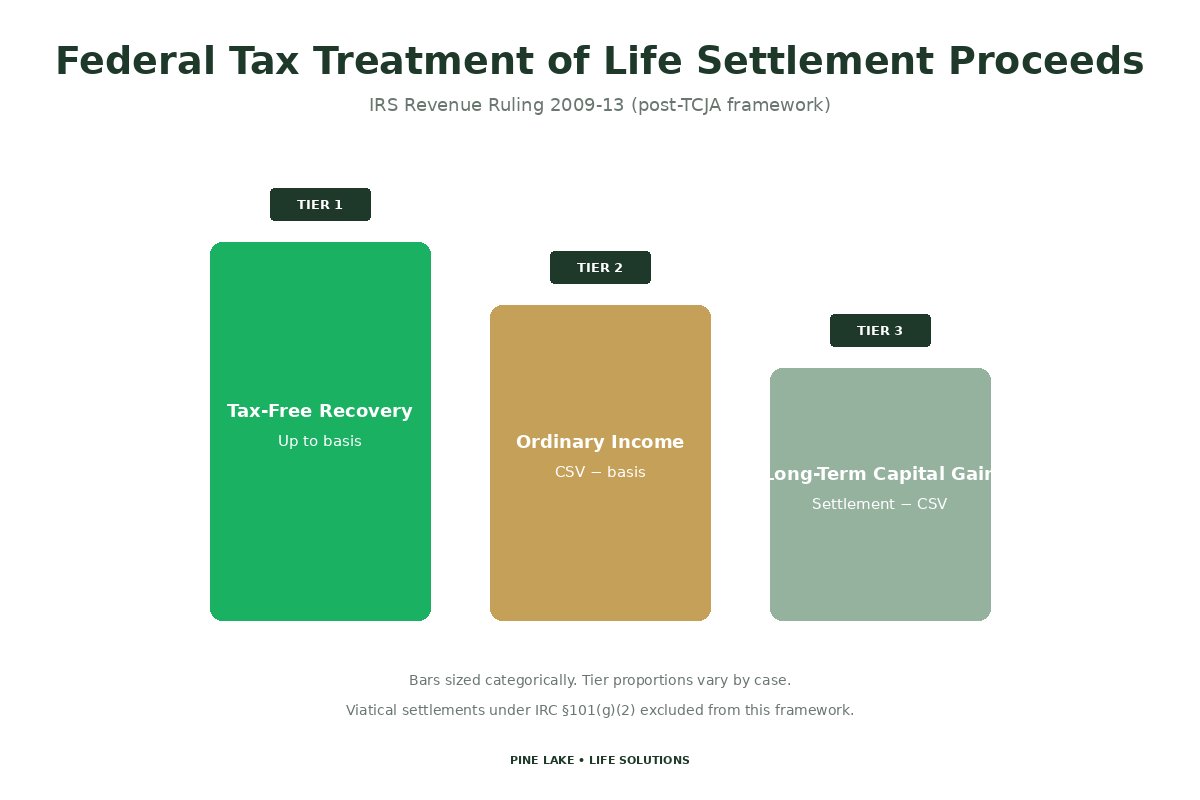
Section 2035 by its terms does not apply to a bona fide sale for adequate and full consideration in money or money’s worth. That is a statutory carve-out, and it is directly relevant to anyone considering a life settlement.
A genuine arm’s-length sale of a policy for its fair market value is not a gift. The insured receives value equal to what was given up, so there is nothing to pull back into the estate. What is in the estate afterward is the cash, which is a smaller number than the death benefit — a result that is entirely ordinary and not a tax scheme.
Two cautions belong with that.
First, “bona fide” and “adequate and full consideration” are doing real work. A sale to a relative at a token price is a partial gift, and the gift portion is exposed. Competing offers, a licensed provider, and a documented closing are what make a sale look like a sale.
Second, a sale creates a different problem in a different chapter of the code. The transfer-for-value rule can strip the income tax exclusion from the death benefit in the buyer’s hands, and the 2017 tax law added reporting obligations for reportable policy sales on Forms 1099-LS and 1099-SB. Solving an estate tax problem by creating an income tax problem is a well-worn mistake. Have both analyzed together by your CPA.
What It Is Confused With
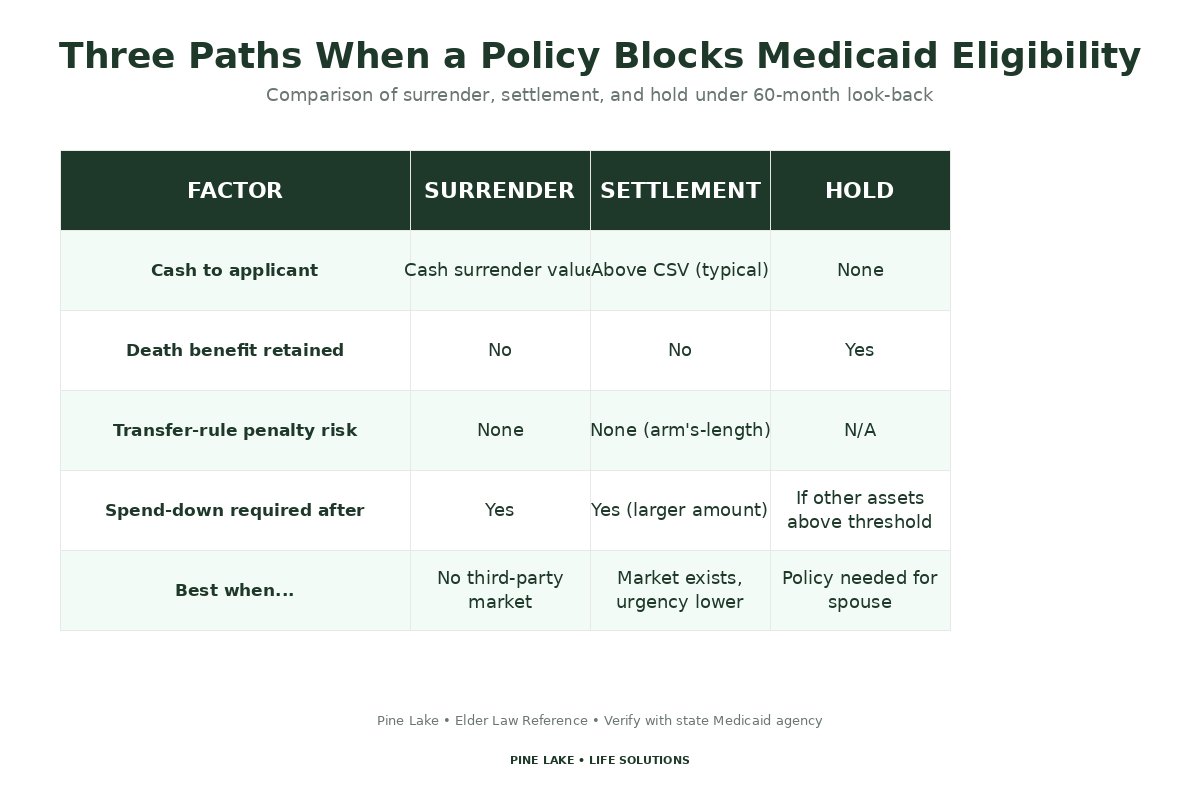
The Medicaid five-year look-back. This is the confusion that costs families the most, because the two rules have almost nothing in common except a countdown. The Medicaid look-back is 60 months, is administered by your state Medicaid agency, applies to uncompensated transfers of any asset, and produces months of ineligibility for long-term care rather than a tax. See the look-back period explained. A transfer can be entirely safe under section 2035 and disastrous under Medicaid, or the reverse.
The two-year contestability period is an insurance contract term about misrepresentation on the application. Different subject entirely.
The three-year statute of limitations on tax returns is unrelated coincidence of number.
The Goodman triangle is a gift tax problem created by having three different parties as owner, insured and beneficiary. Section 2035 involves the insured transferring their own policy. Read how the Goodman triangle works; the repairs for one can trigger the other, which is exactly why both belong in the same conversation with counsel.
Estate tax portability lets a surviving spouse use a deceased spouse’s unused exclusion and requires a timely Form 706. It is a reason to file even when no tax is due. See how portability works.
What To Do About It, Depending On Where You Sit
If your estate is nowhere near the exclusion. Do not let this rule drive any decision. For a household with a $1.2 million net worth, section 2035 is a curiosity, and structuring around it can create real costs — trustee fees, lost flexibility, an unnecessary income tax event — in exchange for a tax that will never be owed. Ask about your state’s own estate or inheritance tax and then move on.
If you have already transferred a policy. Write down the transfer date and put it with the estate documents. Request Form 712 from the carrier now rather than leaving your executor to chase it. Note the date three years out on the calendar. There is no action that shortens the window; the only variable is whether the family knows about it.
If a new policy is being purchased for estate liquidity. Have the trust apply for and own it from inception. That eliminates the exposure entirely, and it costs nothing to do it in the right order.
If you are considering selling a policy rather than gifting it. A bona fide sale for full value falls outside section 2035, but the income tax analysis is its own matter and the family conversation about a beneficiary who was expecting a death benefit comes first. Selling is the wrong answer when the coverage is still needed, when the face amount is small, or when the insured is healthy enough that offers will be low — see when a life settlement is a bad idea. To learn what a policy is actually worth before any of these conversations, send the policy cover page for a free, no-obligation review or call (732) 978-9575. We do not give tax or legal advice; take the number to your CPA and estate attorney.
Frequently Asked Questions
Does the three-year rule apply to my family?
Probably not. Under the law enacted in 2025 the federal exclusion is $15 million per person for 2026, so a pulled-back death benefit produces federal estate tax only in very large estates. It still matters in states with their own lower estate or inheritance tax thresholds. Confirm the current federal figure and your state’s rules with your CPA and a local attorney.
What is an incident of ownership?
Any right in the policy with economic value to the owner: the right to change the beneficiary, surrender or cancel, assign, pledge as collateral, or borrow against cash value. Releasing any of them within three years of death can trigger the rule. It is broader than transferring the owner line, which is why partial arrangements often fail to accomplish what was intended.
How do I avoid the three-year rule entirely?
Have an irrevocable life insurance trust apply for and own the policy from inception, so the insured never holds an incident of ownership to release. There is no exposure on a policy the insured never owned. This is the single most valuable sequencing decision when new coverage is being purchased for estate liquidity, and it costs nothing to do in the right order.
Does selling a policy trigger the three-year rule?
A bona fide sale for adequate and full consideration is excepted from section 2035 by the statute itself, because value received equals value given up and there is nothing to pull back. A sale to a relative at a token price is treated as part gift and the gift portion remains exposed. Document the offers and the closing.
Is this the same as the Medicaid five-year look-back?
No, and confusing them is expensive. The Medicaid look-back is 60 months, administered by the state Medicaid agency, applies to uncompensated transfers of any asset, and produces months of ineligibility for long-term care rather than a tax. A transfer can be safe under one rule and disastrous under the other. Both need to be checked separately.
What should my executor have on file?
The transfer date and the transfer documents, kept with the will, and Form 712, the Life Insurance Statement, requested from the carrier. Pulled-back proceeds are reported on Form 706, due nine months after death with a six-month extension available. An executor who does not know a transfer occurred cannot report it correctly, and that is the most common failure point.
Find out what your policy is worth — free, confidential, no obligation.
A 15-minute educational review covers your eligibility, every alternative, and a realistic view of what each path would net you.
Related Reading
- What Is The Transfer For Value Rule
- What Is The Medicaid Look Back Period
- What Is The Goodman Triangle
- What Is Estate Tax Portability
- What Is Trust Owned Life Insurance
- When A Life Settlement Is A Bad Idea
- What Is A Life Settlement
- How Much Is My Policy Worth
Pine Lake Legacy does not purchase life insurance policies and does not provide legal, tax, or investment advice. Information provided is for educational purposes only. Eligibility for any option, including life settlements, is not guaranteed and depends on individual circumstances, policy terms, underwriting, and market conditions. Consult independent legal, tax, or financial professionals before making decisions regarding a life insurance policy.