
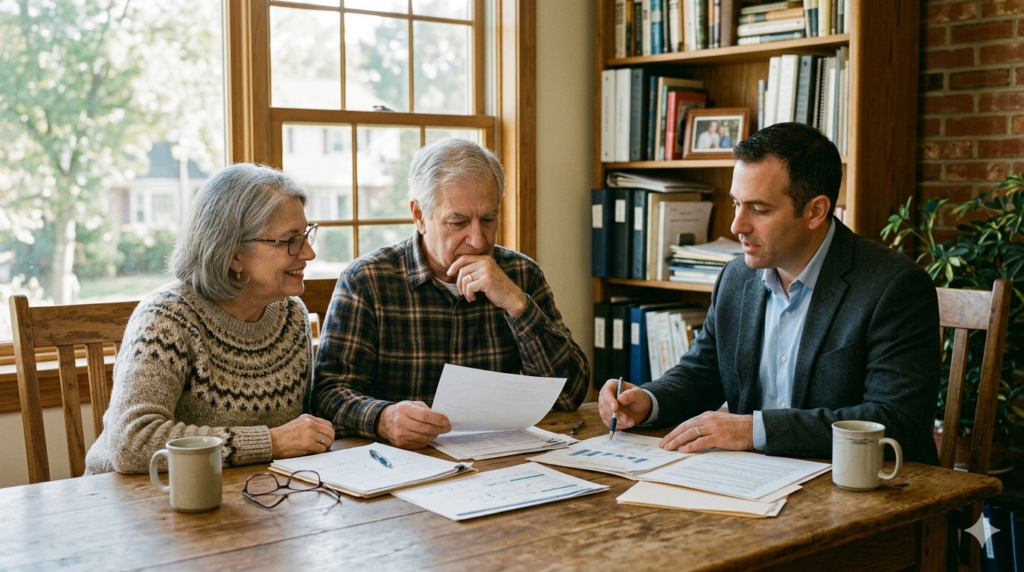
In Palm Beach Gardens, Florida, the daily rate a facility quotes you over the phone typically accounts for 70 to 85 percent of what the family actually pays – the rest arrives as level-of-care surcharges, supply charges, one-time fees and services billed by providers who never appear on the facility invoice at all. A quoted $370 a day, about $11,250 a month, routinely settles out between $12,500 and $14,000 once the stack is complete. Palm Beach Gardens sits in Palm Beach County, the Florida county with the largest 65-and-older population by count, and the north county market along the PGA Boulevard corridor prices at the top of the state.
This page takes the rate apart. What the base covers, then each layer that lands on top of it, then the one-time charges, then the bills that come from outside the building entirely, then the all-in figure to actually budget. Medicaid gets one section, because in Palm Beach County most families spend privately first and the arithmetic of the bill is what decides how long that lasts. Every dollar figure is a 2026 range from cost-of-care survey methodology, not a verified price – get a written, itemized rate sheet from each facility and confirm program rules with the named agencies.
In This Article
- What the Base Rate Actually Covers
- Layer One: Level-of-Care Tiers, the Charge That Grows
- Layer Two: Medications, Supplies and the Small Charges That Add Up
- Layer Three: The One-Time Charges
- Layer Four: The Bills That Never Touch the Facility Invoice
- The All-In Number to Budget in Palm Beach Gardens
- One Section on Medicaid: the Palm Beach County Office and Patient Responsibility
- Runway Against the Real Bill, and Where a Life Policy Fits
- Frequently Asked Questions
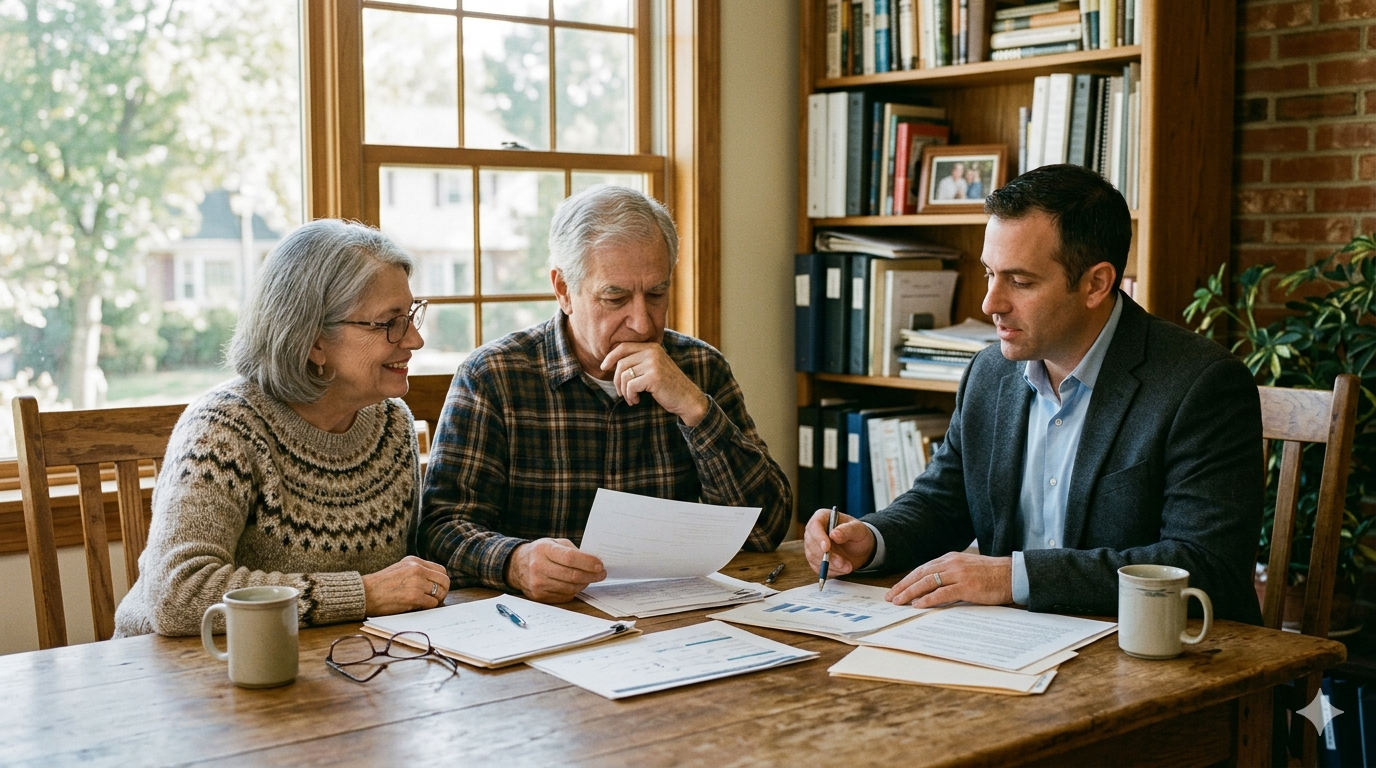
What the Base Rate Actually Covers
Ask for the base rate in writing and ask what it includes. In a Palm Beach County skilled nursing facility the base daily rate generally covers the room, three meals and snacks, routine nursing care, housekeeping and laundry, basic activities, and use of common areas. In an assisted living community the base rate covers the apartment, meals, housekeeping, activities and a general level of oversight – and often almost nothing else that a declining resident needs.
The 2026 starting points for this market, as estimates from cost-of-care survey methodology adjusted for the Palm Beach metropolitan area:
- Skilled nursing, semi-private: roughly $10,500 to $12,000 a month, against a Florida statewide range of roughly $9,000 to $10,500.
- Skilled nursing, private room: roughly $11,500 to $13,500 a month.
- Assisted living: roughly $5,500 to $7,500 a month in the Palm Beach Gardens and north county corridor, against a Florida median nearer $4,800 to $5,800.
Palm Beach Gardens prices high for reasons that are visible from the road. Typical home values here run far above the Florida median, household incomes are high, and the PGA Boulevard corridor holds a dense cluster of continuing care communities and hospital-adjacent rehabilitation capacity serving a very large local retiree population. Senior housing is priced against the market it draws from, and this one pays.
Layer One: Level-of-Care Tiers, the Charge That Grows
This is the largest and most predictable add-on, and it is where assisted living quotes become misleading. Most Palm Beach County assisted living communities price care in tiers, assessed by a points system covering assistance with bathing, dressing, toileting, transferring, eating, mobility and medication management. Each tier adds money to the base rent:
- Tier one, minimal assistance: often $400 to $900 a month above base.
- Tier two, moderate daily assistance: often $900 to $1,800 above base.
- Tier three or higher, extensive assistance including two-person transfers: often $1,800 to $3,000 above base.
So a $6,200 quoted rate in Palm Beach Gardens is realistically $7,100 to $8,000 within a year for a resident who is declining, and that is separate from the annual across-the-board increase. Three questions to ask before signing: what is the scoring tool, who performs the reassessment and how often, and may we see the tier schedule in writing? Skilled nursing generally bundles care into the daily rate rather than tiering it, but it applies its own surcharges for isolation precautions, bariatric equipment and specialized wound care.
The other structural item to check is the assisted living license type. Florida assisted living facilities are licensed by the Agency for Health Care Administration, and a building holding only a standard license may be unable to keep a resident who needs what an Extended Congregate Care or Limited Nursing Services license permits. A forced move is the most expensive surcharge of all.
Layer Two: Medications, Supplies and the Small Charges That Add Up
Individually minor, collectively $400 to $1,200 a month in this market. Ask about each explicitly:
- Medication administration or management fee: commonly $300 to $700 a month in assisted living, sometimes tiered by number of medications or number of daily passes.
- Incontinence supplies and care: frequently $150 to $500 a month, sometimes billed as a separate care tier.
- Pharmacy charges: the facility’s contracted pharmacy bills separately, and drugs not on the plan formulary are the resident’s responsibility.
- Beauty and barber services, cable, telephone, guest meals: a few hundred dollars a month in aggregate.
- Transportation: scheduled group transport is often included; individual medical transport frequently is not.
- Second-person occupancy fee if a spouse shares the apartment, generally $800 to $1,500 a month.
Get all of these on one written sheet before admission and compare across communities. Two Palm Beach Gardens buildings quoting the same base rate can differ by $900 a month once these are priced, and the cheaper base is frequently the more expensive building.
Layer Three: The One-Time Charges
These land at admission, when a family has the least attention available for them.
Community fee or entry fee. A one-time charge, usually non-refundable, commonly one to two months of rent in assisted living – so $6,000 to $14,000 in this market. Ask whether it is refundable if the resident dies or moves within the first ninety days, which happens more often than families expect.
Continuing care entry fees. The north Palm Beach County corridor has continuing care retirement communities that sell a contract with a substantial entry fee, sometimes six figures, sometimes partially refundable, in exchange for a promise of access to higher levels of care on the same campus. In Florida these contracts are regulated by the Florida Office of Insurance Regulation, which reviews the financial condition of providers. Have an attorney read the contract and get the disclosure statement. An entry fee is generally not a Medicaid-friendly use of assets and interacts with the look-back rules – an elder law question before you write the check, not after.
Deposits and apartment preparation. Security deposits, paint and carpet charges, and in some buildings a charge for installing grab bars or a medical alert pendant.
Assessment fee. Some communities charge for the initial nursing assessment itself.
Read what is in the admission agreement before signing, and never sign as a personal financial guarantor for a parent’s bill without counsel reviewing the language.
| Charge layer | Assisted living, Palm Beach Gardens 2026 | Skilled nursing semi-private, 2026 |
|---|---|---|
| Base quoted rate | $6,200 | $11,250 |
| Level-of-care tier | +$900 – $1,800 | Usually bundled; isolation and bariatric surcharges apply |
| Medication administration | +$300 – $700 | Included in base |
| Incontinence supplies and care | +$150 – $500 | Included in base |
| Outside billing: Part B coinsurance, Part D, therapy, transport | +$400 – $1,200 | +$400 – $1,200 |
| Bed-hold days during hospitalization | Varies | Charged per day; ask the rate |
| One-time community or entry fee | $6,000 – $14,000 | Deposit varies |
| Realistic all-in monthly | $7,600 – $9,300 | $12,000 – $13,800 |

Layer Four: The Bills That Never Touch the Facility Invoice
These surprise families most, because they arrive from providers the family never chose and never met.
- Physician, podiatry, dental, optometry, psychiatry and audiology visits in the building are billed to Medicare Part B, which leaves 20 percent coinsurance unless a Medigap policy covers it.
- Medicare Part D drug costs – copays, non-formulary drugs, and gaps – continue in the facility.
- Therapy beyond what Medicare covers. When the covered rehabilitation stay ends, continued physical or occupational therapy is generally private pay.
- Ambulance and emergency transport, frequently multiple times a year for a frail resident.
- Bed-hold days. When a resident is hospitalized, the facility may charge to hold the bed. Ask what the daily bed-hold rate is and how many days are covered – this is a real and commonly unbudgeted charge.
- Private-duty companion or aide hours hired on top of facility staffing, at roughly $28 to $35 an hour in Palm Beach County as of 2026.
- Hospice services, generally covered by Medicare, but room and board in a facility is not covered by the hospice benefit.
Budget $400 to $1,500 a month for this layer depending on the resident’s health and on whether a Medigap policy is in place. It is the single most common reason a family that budgeted carefully still runs short.
The All-In Number to Budget in Palm Beach Gardens
Stack the layers and the honest 2026 budget for this market looks like this. In assisted living, a $6,200 base becomes roughly $7,600 to $9,300 all-in once a moderate care tier, medication management, supplies and outside billing are counted. In memory care, a $7,800 base becomes roughly $9,000 to $10,800. In semi-private skilled nursing, an $11,250 base becomes roughly $12,000 to $13,800. In a private skilled nursing room, roughly $13,000 to $15,000.
Two Palm Beach Gardens-specific pressures sit on top of even that. First, if the family is holding a north county house or condo while paying for care, the carrying cost is unusually high: Florida property insurance has risen sharply and condominium structural reserve assessments following recent state building-safety requirements have hit older coastal buildings hard. An empty house here can easily cost $2,000 to $3,500 a month in taxes, insurance, association dues and upkeep. Second, Palm Beach County’s very large retiree population means competition for the better-rated buildings is constant, and high-occupancy buildings do not discount. Verify licensure and bed counts with AHCA and check staffing, ownership and inspection results on CMS Care Compare before committing.
One Section on Medicaid: the Palm Beach County Office and Patient Responsibility
The program is Statewide Medicaid Managed Care Long-Term Care (SMMC LTC), Florida’s managed long-term care program. Financial eligibility is determined by the Florida Department of Children and Families through ACCESS Florida – apply online through the ACCESS portal, by mail, or at the DCF ACCESS service location serving Palm Beach County in the West Palm Beach area; confirm the current location and hours with DCF. The level-of-care determination comes from the Department of Elder Affairs CARES program. Enrollment for community waiver services runs through the Aging and Disability Resource Center designated for Planning and Service Area 9, which covers Palm Beach, Martin, St. Lucie, Indian River and Okeechobee counties and is headquartered in West Palm Beach. That agency is also the route to SHINE, Florida’s free Medicare and benefits counseling program.
The rules in general terms: the countable asset limit for a single applicant has been $2,000 – verify for 2026 with DCF. Florida applies a 60-month look-back to asset transfers, with a penalty period for gifts inside that window, and operates a Medicaid estate recovery program that can pursue a deceased recipient’s estate subject to statutory exceptions.
There is one billing fact specific to this page’s subject. Once Medicaid pays for a nursing facility stay, the resident’s income does not stay with the resident – almost all of it is applied to the facility as patient responsibility, leaving only a small monthly personal needs allowance, which in Florida has been in the neighborhood of $130 a month in recent years. Verify the current figure with DCF. Families who assume a parent’s Social Security continues to fund haircuts, a phone and clothing are usually wrong. None of this is advice about your case – take it to an elder law attorney licensed in Florida, to DCF, or to SHINE. Our Palm Beach Gardens spend-down page and the Florida limits page go deeper.
Runway Against the Real Bill, and Where a Life Policy Fits
Do the division against the all-in number, not the quoted one. A household with $400,000 liquid and $3,600 a month in Social Security and pension income, entering Palm Beach Gardens assisted living at an all-in $8,400, draws $4,800 a month and lasts about eighty-three months. Move that resident to semi-private skilled nursing at an all-in $12,900 and the draw is $9,300 a month – the same $400,000 lasts about forty-three months. Using the quoted rate instead of the all-in rate would have overstated both figures by roughly 15 percent, which in the skilled nursing case is six months of care.
Life insurance shows up in that worksheet from both directions. It can block eligibility: under the rules Florida applies, once total face value across all policies exceeds a low threshold – commonly $1,500 – the cash surrender value becomes countable, which is a routine reason an otherwise clean application fails the $2,000 test. See how life insurance is treated as a Medicaid asset. It can also fund care: a policy heading for lapse or surrender is sometimes worth more on the secondary market than its cash surrender value, and a life settlement – a sale to a licensed institutional buyer for more than surrender value and less than the death benefit – turns it into months against the all-in bill. Because proceeds are countable and the sale sits in the look-back window, sequence it with an elder law attorney.
Where it is the wrong answer: small face amounts inside a burial exclusion, policies already assigned to funeral expenses, term with no conversion right remaining, a healthy insured in their sixties, or a case where a surviving spouse needs the death benefit. Pine Lake Life Solutions does not purchase policies and is not licensed in every state – we provide a free policy review. See what determines an offer, our Palm Beach Gardens page, and the Brevard County page for the regional view. Florida insurance complaints go to the Department of Financial Services Division of Consumer Services.
Frequently Asked Questions
What does a nursing home really cost in Palm Beach Gardens, Florida?
Budget above the quoted rate. A semi-private skilled nursing base of roughly $10,500 to $12,000 a month as of 2026 settles closer to $12,000 to $13,800 all-in once outside billing, therapy, transport and bed-hold charges are counted. A private room runs roughly $13,000 to $15,000 all-in. Ask for an itemized written rate sheet.
Why is Palm Beach County more expensive than the Florida average?
Senior housing is priced against the market it serves, and north Palm Beach County has among the highest home values and household incomes in the state. Palm Beach County also has the largest 65-and-older population of any Florida county by count, so demand for well-rated buildings is constant and high-occupancy communities do not discount.
What is a level-of-care tier and how much does it add?
Assisted living communities score a resident’s need for help with bathing, dressing, toileting, transfers, mobility and medications, then charge a tier above the base rent. In this market expect roughly $400 to $900 for minimal help, $900 to $1,800 for moderate, and $1,800 to $3,000 for extensive assistance including two-person transfers.
What is a bed-hold charge?
When a resident is hospitalized, a facility may bill a daily rate to hold the room rather than fill it. Families rarely budget for it and it is not always covered. Ask each facility what the bed-hold rate is, how many days are held, and what happens to the room if you decline to pay it.
Which office handles Medicaid for a Palm Beach Gardens resident?
Palm Beach Gardens is in Palm Beach County. Financial eligibility is determined by the Florida Department of Children and Families through ACCESS Florida, with a service location serving the county in the West Palm Beach area. Community waiver enrollment runs through the Aging and Disability Resource Center for Planning and Service Area 9, headquartered in West Palm Beach.
Does my mother keep her Social Security once Medicaid pays?
Generally no. Once Medicaid pays for a nursing facility stay, nearly all of the resident’s monthly income is applied to the facility as patient responsibility, leaving a small personal needs allowance that has been in the neighborhood of $130 a month in Florida in recent years. Verify the current figure with the Department of Children and Families.
Are continuing care entry fees worth it in north Palm Beach County?
It depends entirely on the contract terms, which is why an attorney should read it. Entry fees can reach six figures and refundability varies. Florida regulates continuing care contracts through the Office of Insurance Regulation, which reviews provider financial condition. An entry fee is also generally not a Medicaid-friendly use of assets and interacts with the look-back rules.
Find out what your policy is worth — free, confidential, no obligation.
A 15-minute educational review covers your eligibility, every alternative, and a realistic view of what each path would net you.
Related Reading
- Medicaid Spend Down Palm Beach Gardens Fl
- Life Settlements Palm Beach Gardens Fl
- Florida Medicaid Asset Income Limits
- Sell Life Insurance Policy Brevard County Fl
- Nursing Home Medicaid Spend Down
- Life Insurance Counts Medicaid Asset
- Nursing Home Admission Agreement
- How Much Can I Get For My Life Insurance Policy
Pine Lake Life Solutions does not purchase life insurance policies and does not provide legal, tax, or investment advice. Information provided is for educational purposes only. Eligibility for any option, including life settlements, is not guaranteed and depends on individual circumstances, policy terms, underwriting, and market conditions. Consult independent legal, tax, or financial professionals before making decisions regarding a life insurance policy.