

The quoted rate at an Osceola County nursing home is a starting point, not a price. A Kissimmee facility that tells a family $340 a day is quoting a base rate at one level of care, and the invoice that arrives six weeks later frequently runs $600 to $1,800 a month higher once the level-of-care tier, medical supplies, incontinence care and separately billed ancillaries land. As of 2026 the realistic all-in range for a semi-private skilled nursing room in this county is roughly $9,800 to $10,900 a month, and for a private room roughly $11,000 to $12,400.
Families here are especially exposed to that gap, and not because anyone is careless. Osceola County has a large Puerto Rican and Latino population, including many households that relocated after Hurricane Maria, and a high share of multigenerational homes where elder care has been handled inside the family for years. When a family that has been providing care itself finally needs a facility, they are negotiating a rate structure for the first time, often under acute pressure, sometimes in a second language.
So this page is about the rate sheet. What the base covers, what it does not, which charges are negotiable, which are not, and the exact questions to put in writing before anyone signs an admission agreement in Kissimmee, St. Cloud, Poinciana or Celebration.
In This Article
- What the Base Rate Actually Buys
- The Add-Ons That Appear After You Sign
- Eleven Questions to Put in Writing Before You Sign
- Family Caregiving, Language, and the Cost That Never Shows on an Invoice
- Florida Medicaid — SMMC LTC, in One Section
- Where an In-Force Policy Fits, and Where It Honestly Does Not
- Frequently Asked Questions

What the Base Rate Actually Buys
In a Florida skilled nursing facility, the base daily or monthly rate generally covers room and board, meals and standard therapeutic diets, routine nursing care, assistance with activities of daily living at the assessed level, housekeeping and laundry of bed linens, activities programming, and basic personal care items. Using Genworth-style cost-of-care survey methodology and CareScout survey trends carried into 2026, Osceola County base rates fall in the ranges above — roughly $9,800 to $10,900 monthly semi-private and $11,000 to $12,400 private — which places the county close to the Florida statewide median, a little below the coastal counties and a little above the rural interior.
Assisted living is a different license and a different structure: roughly $4,300 to $5,300 per month as of 2026 in Osceola County for a standard one-bedroom, which is consistent with Florida’s statewide assisted living median running well below the national median because the state licenses an unusually deep supply of facilities. Memory care within an assisted living community typically adds $1,200 to $2,200.
Osceola’s facility inventory is modest — roughly 8 to 12 Medicare- and Medicaid-certified nursing facilities as of 2026, a count to verify on the CMS Care Compare tool along with staffing ratings and inspection history, and on FloridaHealthFinder.gov, maintained by the Agency for Health Care Administration. With few facilities, comparison shopping on price has limited effect; comparison shopping on what is included in the price has a great deal.
The Add-Ons That Appear After You Sign
These are the charges that turn a quoted rate into a real bill. Not one of them is hidden in a legal sense; every one of them is easy to miss in an admission conversation held the day before a hospital discharge.
- Level-of-care tier. The largest single variable. Facilities assess acuity — transfers, feeding assistance, behaviors, wound care — and assign a tier. A step up commonly costs $500 to $1,200 a month, and the reassessment can happen within weeks of admission.
- Incontinence supplies and care. Sometimes bundled, frequently not. This alone can run $150 to $400 a month.
- Therapy beyond the covered period. Physical, occupational and speech therapy are covered while Medicare or the managed care plan authorizes them. When authorization ends, continued therapy is either dropped or billed.
- Medication administration and pharmacy. Often billed by a contracted pharmacy rather than the facility, and not visible on the facility rate sheet at all.
- Durable medical equipment. Specialty mattresses, wheelchairs and other equipment beyond the standard bed.
- Private-duty sitters. When a resident needs one-to-one supervision the facility cannot provide, families hire it, at Central Florida hourly rates.
- Beauty shop, transportation, guest meals, cable and phone. Small individually, $100 to $250 a month collectively.
Eleven Questions to Put in Writing Before You Sign
Ask for answers in writing, in the admission agreement or as an attachment. A facility that will not put a rate structure in writing is telling you something.
- What is the all-in monthly rate at my parent’s currently assessed level of care?
- What tier is that, how many tiers exist, and what does each cost?
- What triggers a reassessment, and how much notice do we get?
- Are incontinence supplies and care included at this tier?
- Which services are billed by third parties rather than the facility?
- Is the base rate guaranteed for twelve months, or until the next annual increase?
- When was the last rate increase and how large was it?
- What is the bed-hold policy if my parent is hospitalized, and what do we pay?
- Will the facility retain my parent after conversion to Florida Medicaid?
- What are the discharge criteria — the point at which needs exceed what this facility will provide?
- Who do we call when a charge appears that we do not recognize?
Do not sign as a personal guarantor of payment, and be careful about signing as “responsible party” without understanding the obligations that come with it. Our guide to the nursing home admission agreement covers the clauses that cause the most trouble, and a Florida elder law attorney should review anything unclear.
| Line item | In the base rate? | Typical monthly impact in Osceola County (2026) |
|---|---|---|
| Room, meals, routine nursing | Yes | $9,800 – $12,400 depending on room type |
| Level-of-care tier above entry | No | +$500 to +$1,200 per step |
| Incontinence supplies and care | Sometimes | +$150 to +$400 |
| Therapy after authorization ends | No | Varies; billed or discontinued |
| Pharmacy and medication administration | Often third-party billed | Varies widely |
| Private-duty sitter for one-to-one care | No | Hourly, can exceed $1,000 |
| Salon, transport, guest meals, cable | No | +$100 to +$250 |
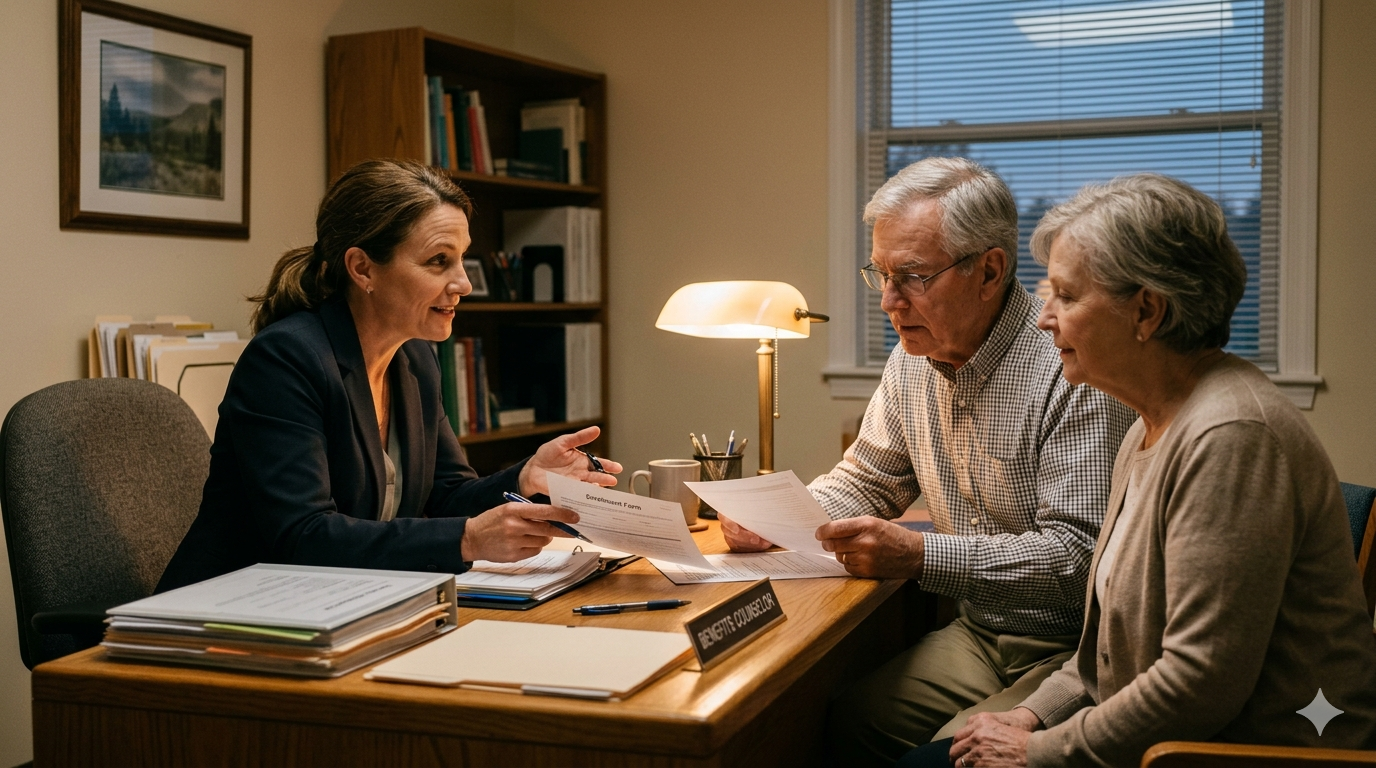
Family Caregiving, Language, and the Cost That Never Shows on an Invoice
Osceola County families carry an unusually large share of elder care inside the household. That is a genuine strength — it delays facility placement by months or years and preserves both money and dignity. It also has costs that never appear on a rate sheet: a working adult child who cuts hours or leaves a job, a spouse whose own health deteriorates under the load, and a family that arrives at the facility decision exhausted and without a financial plan already built.
Two practical resources cost nothing. The Senior Resource Alliance is the Area Agency on Aging serving Osceola County and operates the Aging and Disability Resource Center for this region; it can explain caregiver support programs, respite options and the Florida Medicaid pathway. Florida’s State Health Insurance Assistance Program, SHINE (Serving Health Insurance Needs of Elders), run through the Department of Elder Affairs, provides free one-on-one counseling on Medicare, Medicare Advantage and coverage denials, and Spanish-language assistance is available in this region — confirm when you call.
Ask both about the alternative to a facility. Florida Medicaid’s long-term care program funds home and community-based services as well as nursing facility care, and for a household already providing hands-on care, an in-home benefit can be worth more than a bed. That is a conversation worth having before you tour anything. If the caregiving load is what is forcing the decision, the financial options when a caregiver is at the end of their capacity covers the rest.
Florida Medicaid — SMMC LTC, in One Section
Long-term nursing home coverage in Florida comes from Florida Medicaid — Statewide Medicaid Managed Care Long-Term Care (SMMC LTC), not Medicare. The financial application goes to the Florida Department of Children and Families through its ACCESS program; the Department of Elder Affairs CARES program performs the level-of-care assessment establishing medical need; the Agency for Health Care Administration handles enrollment into a managed care plan.
Figures to verify, not assume: an individual countable-asset limit long standing at $2,000 — treat as the 2026 figure and confirm with DCF; a 60-month look-back on transfers, with a penalty period for gifts inside that window; and an estate recovery program that can pursue reimbursement from the estate after death. Life insurance is counted in Florida by aggregate face value: if the total face amount of all policies on one person exceeds $2,500, the cash surrender value generally counts as an available asset; at or below $2,500 the policies are typically excluded.
One point specific to the rate-sheet theme of this page: Medicaid pays the facility a rate set by the state, and the resident applies nearly all monthly income toward the cost of care while keeping a small personal needs allowance. That means most of the add-ons above stop being family expenses once Medicaid coverage begins — which is precisely why the private-pay months before eligibility are the expensive ones. This page is not eligibility advice. See the Florida limits page and the Osceola County spend-down guide, and retain a licensed Florida elder law attorney.
Where an In-Force Policy Fits, and Where It Honestly Does Not
Do the division. At a $10,300 semi-private room in Osceola County with $2,100 of monthly Social Security applied, a family is funding about $8,200 a month, so $90,000 of liquid assets covers roughly eleven months. Add a $60,000 asset and it becomes eighteen. That difference is usually the difference between choosing a facility and taking the one with an opening.
Life insurance is the asset most often missing from that inventory. Look for individual permanent policies, small paid-up whole life policies from decades ago, group life certificates carried out of retirement, and coverage bought through an employer in Central Florida’s hospitality and services economy. For each one, request an in-force illustration from the carrier rather than relying on the annual statement; the illustration shows the current cash surrender value, the premium needed to keep the contract alive, and how long it survives if premiums stop. With that document, three options become comparable: keep paying, surrender for cash value, or sell the policy in the secondary market as a life settlement. Where a policy qualifies, a settlement generally pays more than surrender value and much less than face value, and how much more depends entirely on the insured’s age, health and the contract’s internal cost structure.
Now the cases where selling is the wrong answer, stated plainly. If the aggregate face value of all policies is at or under $2,500, the coverage is likely already excluded from Florida’s asset count and worth keeping. If the coverage is term with no remaining conversion right, there is generally no market for it. If the insured is in good health, offers will be weak or absent. If a surviving spouse will need the death benefit, trading it for a year of care is usually a bad trade. And if the family relies on a small policy to cover funeral costs, converting it to cash creates a different crisis later. Compare the choices directly in lapse versus surrender versus settlement. Pine Lake Life Solutions provides education and a free policy review only; it does not purchase policies and is not licensed in every state.
Frequently Asked Questions
How much does a nursing home cost in Kissimmee or Osceola County?
As of 2026, plan on roughly $9,800 to $10,900 per month all-in for a semi-private skilled nursing room and $11,000 to $12,400 for a private room, with assisted living around $4,300 to $5,300. Osceola sits near the Florida statewide median. Get the written all-in rate at your parent’s assessed level of care from each facility.
Why is our invoice higher than the rate we were quoted?
The quote was almost certainly a base rate at one level of care. Level-of-care tier increases, incontinence supplies, therapy after authorization ends, third-party pharmacy billing, durable medical equipment and small charges like salon and transportation are usually additional. Ask for a written all-in figure and a list of everything billed separately before signing.
Is the level-of-care fee negotiable?
The tier itself is assessment-driven and not really negotiable, but the timing and transparency are. Ask what tier applies at admission, what specifically would trigger a step up, how much notice you receive, and when the first reassessment occurs. If your parent is admitted at peak dependency from a hospital, ask whether the tier steps back down as they recover.
Are there Spanish-language resources for elder care in Osceola County?
Yes. The Senior Resource Alliance is the Area Agency on Aging and Aging and Disability Resource Center serving Osceola County, and Florida’s SHINE program provides free one-on-one Medicare counseling with Spanish-language assistance available in this region. Confirm language availability when you call, and ask each facility directly about Spanish-speaking staff on the unit.
Can Florida Medicaid pay for care at home instead of a nursing home?
Florida’s long-term care program funds home and community-based services as well as nursing facility care, and for a household already providing hands-on care an in-home benefit is sometimes worth more than a bed. Eligibility and the level-of-care assessment still apply. Ask the Aging and Disability Resource Center about this before you tour facilities.
When does selling a life insurance policy not make sense?
When aggregate face value is at or under $2,500 and already excluded from Florida’s asset count, when the coverage is term with no conversion right remaining, when the insured is in good health so offers are weak, when a surviving spouse needs the death benefit, or when the family is relying on a small policy for funeral costs. Get it valued before deciding.
Find out what your policy is worth — free, confidential, no obligation.
A 15-minute educational review covers your eligibility, every alternative, and a realistic view of what each path would net you.
Related Reading
- Medicaid Spend Down Osceola County Fl
- Sell Life Insurance Policy Osceola County Fl
- Florida Medicaid Asset Income Limits
- Nursing Home Admission Agreement
- Caregiver Burnout Financial Options
- Lapse Vs Surrender Vs Settlement
- Life Insurance Counts Medicaid Asset
- Sell Life Insurance Policy Brevard County Fl
Pine Lake Life Solutions does not purchase life insurance policies and does not provide legal, tax, or investment advice. Information provided is for educational purposes only. Eligibility for any option, including life settlements, is not guaranteed and depends on individual circumstances, policy terms, underwriting, and market conditions. Consult independent legal, tax, or financial professionals before making decisions regarding a life insurance policy.