
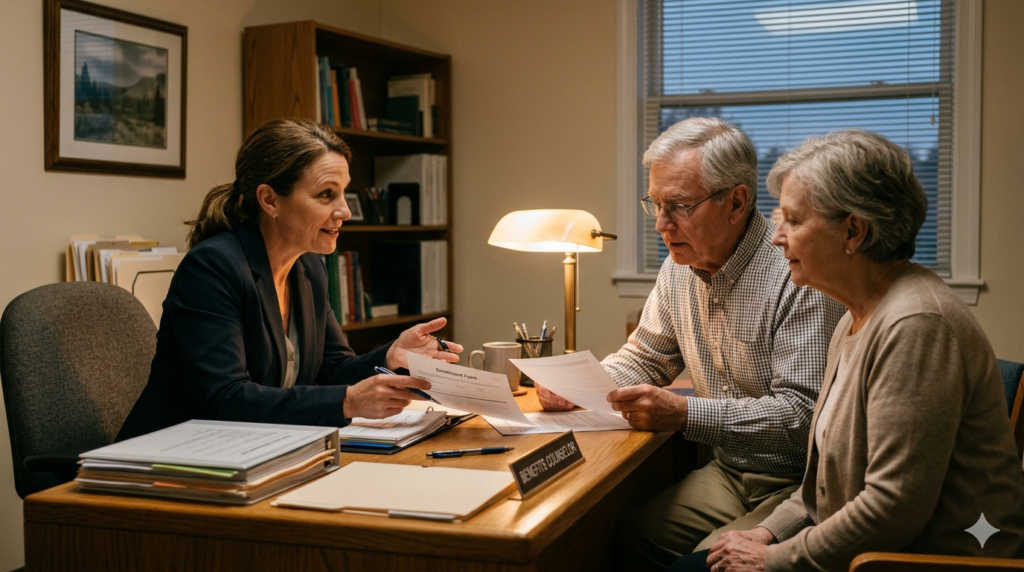
A family in Greeley, Colorado making a dementia-care decision is really choosing among three settings that carry three very different bills and three very different coverage rules — and the middle option, a secured memory care unit in an assisted living residence, is the one Health First Colorado will not pay room and board for. That single fact reshapes the arithmetic more than any monthly rate does, and most families do not learn it until private funds are nearly gone and a discharge notice arrives.
Greeley is the county seat of Weld County, which matters practically because Colorado administers Medicaid through counties: the Weld County Department of Human Services, in Greeley, is where a long-term care application is filed. Weld is also enormous — roughly 4,000 square miles, larger than several states — and unusually young for Colorado, with a 65-and-over share running below the state average, which means facility supply here has been built for a smaller older population than the one arriving. This page isolates the memory-care premium: what it buys, what Colorado’s licensing rules require, where the coverage cliff sits, and when paying it is worth the months it costs.
In This Article
- Three Settings for Dementia Care, Three Very Different Bills
- What Colorado’s Secure-Environment Licensing Actually Requires
- Greeley Price Bands as of 2026, Against the Colorado Median
- Weld County’s Geography Is Part of the Cost
- Health First Colorado: The Room-and-Board Gap, and Where Weld County Applies
- When the Premium Is Worth It, and Where a Policy Fits
- Frequently Asked Questions
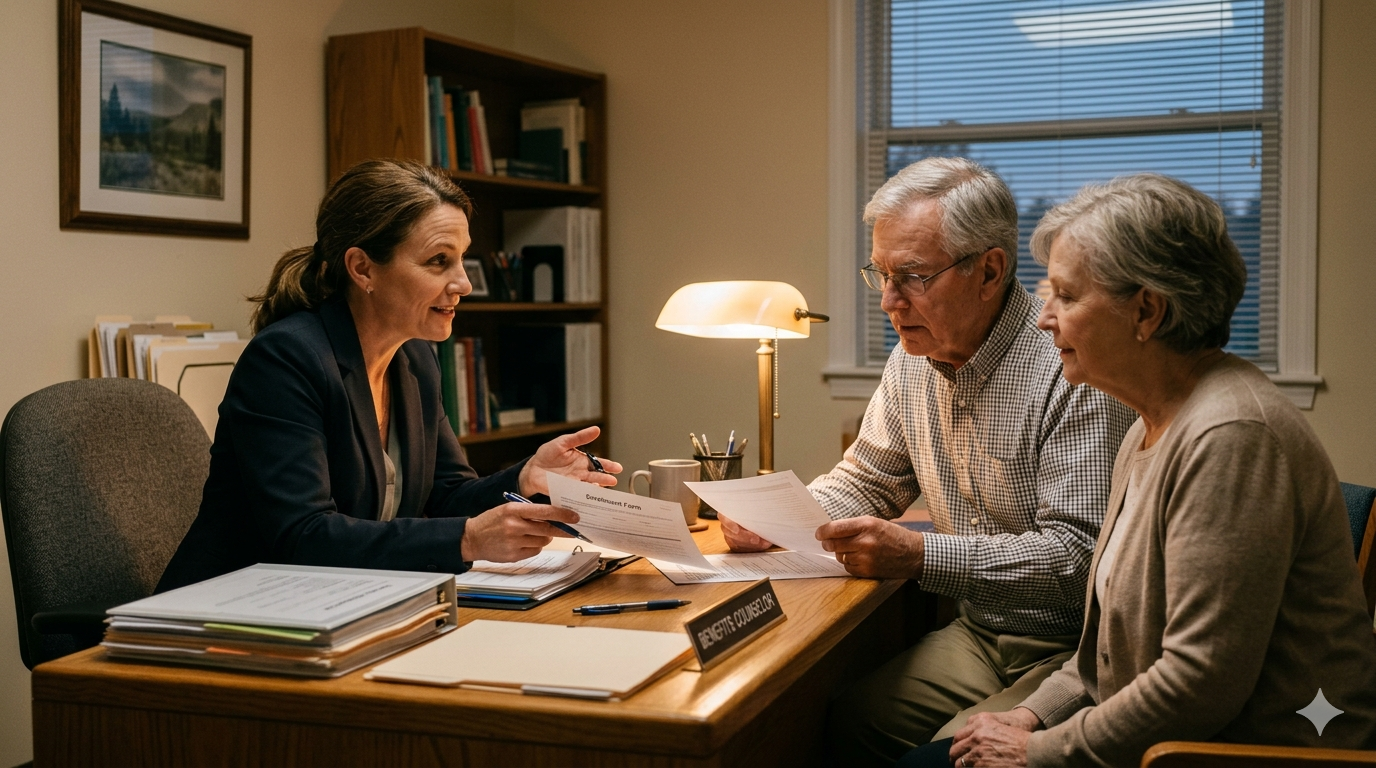
Three Settings for Dementia Care, Three Very Different Bills
Start by separating the options, because families conflate them and the coverage rules are not the same.
Setting one: home, with dementia-trained paid help. In the Greeley area a home health aide at roughly 44 hours a week runs about $5,900 to $7,100 per month as of 2026. Round-the-clock coverage costs far more — often $18,000 to $25,000 a month — which is why home care is affordable up to a threshold of need and then abruptly is not. The break point usually arrives with night wandering or incontinence requiring two-person assistance.
Setting two: a secured memory care unit inside an assisted living residence. Roughly $5,900 to $7,400 per month in the Greeley area, against roughly $4,600 to $5,400 for standard assisted living in the same market. The isolated premium is therefore about $1,300 to $2,000 a month. This is where most families with moderate dementia land, and it is the setting with the coverage gap described later on this page.
Setting three: a dementia or behavioral unit inside a skilled nursing facility. Roughly $8,500 to $9,400 per month for a semi-private room and $9,700 to $10,900 private. More expensive, more medical, and — critically — the setting Health First Colorado covers most reliably when a resident qualifies. Appropriate when dementia is advanced or accompanied by significant medical needs, wound care, or behavioral symptoms an assisted living residence cannot safely manage.
The counterintuitive consequence: the most expensive setting is often the one a family can sustain longest, because it is the one with a public payer behind it. Choosing memory care to save $2,500 a month can shorten the total period of paid care, not lengthen it. That is not an argument for skilled nursing when it is not needed — a secured assisted living unit is a better life for someone who does not need medical care — but it is an argument for running the full arithmetic before committing.
What Colorado’s Secure-Environment Licensing Actually Requires
"Memory care" is a marketing term. What Colorado regulates is the setting.
The Colorado Department of Public Health and Environment (CDPHE) licenses Assisted Living Residences and, separately, skilled nursing facilities. An assisted living residence that houses residents who cannot safely leave unaccompanied must meet requirements for a secure environment, including provisions relating to egress, resident safety and staff training. Confirm the current licensing requirements and the specific residence’s license status and inspection history with CDPHE before you rely on any community’s description of itself. A brochure that says "memory care" is not a license.
The questions that separate real capability from marketing:
- Staffing ratio, daytime and overnight, stated separately. Overnight is where wandering, falls and sundowning actually happen and where communities staff thinnest. Ask what happens when a caregiver calls out, and what percentage of shifts this month were filled by agency staff.
- Dementia-specific training. How many hours at hire, how many annually, delivered by whom. Vague answers are themselves informative.
- The physical environment. An enclosed outdoor space the resident can actually use, circular walking routes, contrast at flooring transitions to reduce falls, visual cueing on doors. A secured unit that is a locked corridor with no outdoor access is not worth a premium.
- Behavioral response at 2 a.m. If the answer is "we call 911," expect emergency department visits, each one a hospitalization risk and a bill.
- Medication practices. Ask what proportion of residents are on antipsychotic medication and what the review process is. For skilled nursing facilities the federal CMS Care Compare tool publishes antipsychotic use rates; assisted living is not federally rated the same way, so you have to ask. Chemical restraint is cheaper than staffing, and price will not tell you which you are buying.
- Discharge criteria. What behaviors or care needs would cause this community to require a move? Get it in writing, because a mid-stay move is destabilizing for someone with dementia and it is the most predictable failure of an under-licensed placement.
Free, neutral help is available through the Weld County Area Agency on Aging, based in Greeley and administered by the county, which provides information and assistance and connects families to the long-term care ombudsman program. Placement referral agencies, by contrast, are typically paid a commission by whichever community admits your parent — ask any advisor how they are compensated.
Greeley Price Bands as of 2026, Against the Colorado Median
These are survey-based planning ranges for Greeley and Weld County as of 2026, trended from Genworth-style annual cost-of-care survey data and current local quotes. They are ranges, not quotes.
- Assisted living, standard unit before level-of-care charges: roughly $4,600 to $5,400 per month.
- Memory care, secured unit: roughly $5,900 to $7,400 per month.
- Semi-private skilled nursing room: roughly $8,500 to $9,400 per month.
- Private skilled nursing room: roughly $9,700 to $10,900 per month.
- Home health aide, about 44 hours a week: roughly $5,900 to $7,100 per month.
Against Colorado’s statewide medians — roughly $8,700 to $9,500 for a semi-private nursing home room and roughly $5,000 to $5,700 for assisted living — Greeley sits at or modestly below the state median, because the Denver–Boulder corridor and the mountain resort counties pull Colorado’s figures upward. A Greeley family has a somewhat longer runway than a Boulder family with identical assets.
Two local facts change the practical picture. Weld County is young for Colorado — a 65-and-over share running in the low teens against a statewide figure nearer 16% — while being one of the fastest-growing counties in the country by absolute population. Facility supply has been built for a smaller older population than the one now forming, and secured memory care units are the tightest segment because they require both physical accommodation and trained staff. Expect real waits for a specific unit and start the search earlier than feels necessary. Greeley’s median home value has been running roughly $430,000 to $470,000 as of 2026, below the Colorado statewide median in the $530,000s to $570,000s, so home equity funds meaningfully fewer months here than the same house would on the Front Range. Verify every figure in writing with each community.
| Setting, Greeley area 2026 | Monthly cost | Gap after $2,400 income | Months from $200,000 | Public coverage when funds run out |
|---|---|---|---|---|
| Home care, aide 44 hrs/week | $5,900 – $7,100 | $3,500 – $4,700 | 43 – 57 | HCBS services may apply |
| Assisted living, standard | $4,600 – $5,400 | $2,200 – $3,000 | 67 – 91 | Services only if an approved facility; room and board not covered |
| Memory care, secured unit | $5,900 – $7,400 | $3,500 – $5,000 | 40 – 57 | Same gap; verify facility status |
| Skilled nursing, semi-private | $8,500 – $9,400 | $6,100 – $7,000 | 29 – 33 | Health First Colorado when eligible |
| Skilled nursing, private room | $9,700 – $10,900 | $7,300 – $8,500 | 24 – 27 | Health First Colorado pays semi-private level |
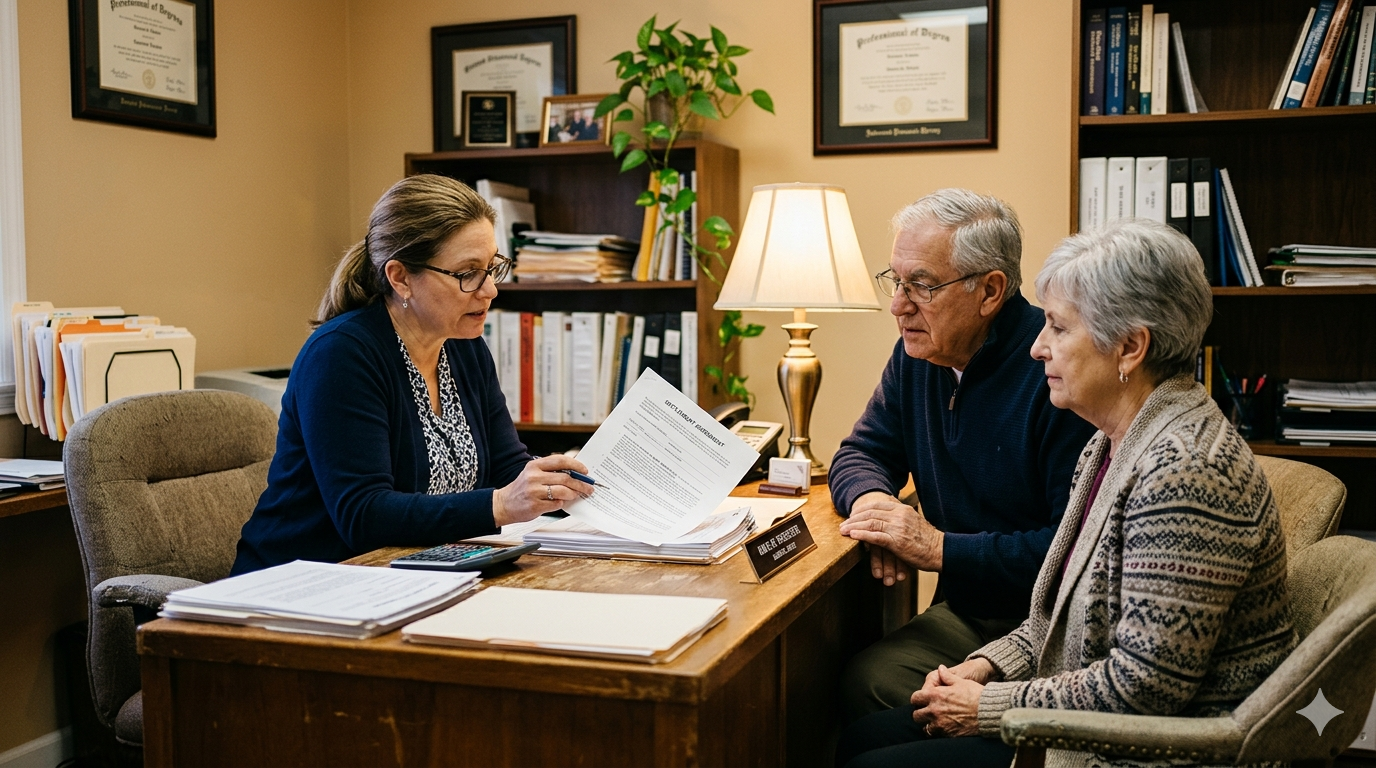
Weld County’s Geography Is Part of the Cost
This is a cost nobody quotes and every Weld County family pays.
Weld County covers roughly 4,000 square miles, stretching from the Front Range suburbs north and east into ranch country. Greeley holds most of the county’s institutional capacity. A family in Fort Lupton, Ault, Eaton, Windsor or the eastern plains is looking at a real drive, in weather that closes roads several times a winter.
Why that is a financial issue rather than an inconvenience: with dementia, family presence is a quality-of-care variable. Residents whose relatives visit frequently and unpredictably get noticed more, get advocated for, get problems caught earlier. A placement 55 minutes away that gets visited twice a month is a worse placement than one 20 minutes away visited four times a week, even if the distant building rates higher. Factor mileage, time and winter road closures into the choice explicitly, and be honest about the visit frequency the family can actually sustain over two or three years rather than the one it intends in week one.
Two practical mitigations. First, ask about telehealth and video-visit support — not a substitute for presence, but useful for a rural family. Second, ask about transportation for medical appointments, because in a county this size a specialist appointment can mean a half-day round trip and facilities charge for transport as an ancillary service. Get the ancillary charge schedule in writing; transportation is one of the line items that surprises families most.
A note on the alternative: Colorado’s home and community-based services can support a person in a rural home for a long time, and for some Weld County families that is the better answer than a Greeley placement they cannot visit. The functional assessment for those services uses Colorado’s ULTC 100.2 instrument, administered through the case management agency serving the region — Colorado’s 2024 case management redesign consolidated the former Single Entry Point agencies into regional Case Management Agencies, so confirm which agency now covers Weld County with the county department or with the state.
Health First Colorado: The Room-and-Board Gap, and Where Weld County Applies
Colorado’s Medicaid program is Health First Colorado, administered at the state level by the Department of Health Care Policy and Financing (HCPF), covering nursing facility care and delivering community alternatives through home and community-based services waivers.
Here is the gap that decides memory-care planning in Colorado. When a resident qualifies, Health First Colorado covers nursing facility care, with the resident contributing nearly all income as patient liability and retaining a small personal needs allowance. For assisted living settings, Colorado’s home and community-based services can pay for services delivered in an Alternative Care Facility, but room and board is treated separately and is generally not covered the way nursing facility care is — the resident is responsible for it out of income. Not every assisted living residence participates as an Alternative Care Facility, and a secured memory care unit in a private-pay-only community will discharge a resident who exhausts assets. Verify the current structure and any participating-facility requirements with HCPF or the Weld County Department of Human Services, because these arrangements change.
The question to ask a memory care community at admission is therefore not "do you take Medicaid" but "are you an approved Alternative Care Facility, and exactly what happens when a resident’s private funds run out?" Get the answer in writing before you sign.
Where to apply. Colorado runs eligibility through counties: the Weld County Department of Human Services, in Greeley, takes the long-term care application, and you can also apply through the state’s online benefits portal. Confirm the current address and hours before going in person. Financial eligibility is determined by the county; functional eligibility comes from the ULTC 100.2 assessment described above.
On the rules as of 2026: the individual countable-asset limit is generally cited at $2,000 — verify with HCPF or the county. Colorado applies the federal 60-month look-back to asset transfers, so gifts within five years of application can trigger a penalty period. Colorado also operates Medicaid estate recovery. Life insurance is treated by aggregated face value: once the combined face amount of all policies on one person exceeds the small burial-exclusion threshold, cash value becomes a countable asset. See how life insurance counts as a Medicaid asset and the Weld County walkthrough in the Greeley spend-down guide. This is not eligibility advice — take your facts to a Colorado elder law attorney, to the Weld County Department of Human Services, or to a free State Health Insurance Assistance Program (SHIP) counselor, whom the Weld County Area Agency on Aging can connect you with.
When the Premium Is Worth It, and Where a Policy Fits
Put the premium into months, which is the only unit that decides anything.
A widow in Greeley receives $2,400 a month in Social Security and a small pension. Standard assisted living at $5,000 leaves a gap of $2,600. The same community’s secured memory care unit at $6,600 leaves a gap of $4,200. A semi-private skilled nursing bed at $8,900 leaves a gap of $6,500. She has $200,000 in liquid assets and a paid-off Greeley house worth about $450,000.
At the assisted living gap, $200,000 lasts about 77 months. At the memory care gap, about 48 months. At the skilled nursing gap, about 31 months — but skilled nursing is the setting with Health First Colorado behind it once she qualifies, so the 31 months is a runway to coverage rather than a runway to nothing. The memory care 48 months, by contrast, may be a runway to a forced move if the community is not an approved Alternative Care Facility. That is the real comparison, and it is not the one the monthly rates suggest.
Pay the premium when there is genuine exit-seeking or wandering, when the resident cannot recognize danger, when sundowning or agitation exceeds what a standard residence can manage, and when the alternative is a fall or a police call. Do not pay it for memory loss without wandering, for a diagnosis alone, or because a community steered you toward its higher-margin wing. Get an independent clinical assessment.
Her house does not extend any of those runways unless it is sold or borrowed against, which brings in every remaining asset, life insurance included. There are four things you can do with an in-force policy. Keep paying it — correct when a surviving spouse depends on the death benefit, when the premium is small relative to the face amount, or when the contract already carries a living-benefit rider. Read the policy first: a dementia diagnosis with an inability to perform activities of daily living is frequently the exact trigger an accelerated death benefit or chronic illness rider was written for, and chronic illness and settlements covers how those interact. Surrender it for the insurer’s formula value, usually the lowest-value outcome. Let it lapse, which converts an asset into nothing — lapse versus surrender versus settlement compares all three. Or sell it in a regulated life settlement, in which a licensed buyer pays more than surrender value and less than the death benefit and assumes the premiums. Colorado regulates life settlements through the Division of Insurance within the Department of Regulatory Agencies.
The honest limits. A settlement generally does not help when the face amount is small, when the insured is healthy for their age, or when a surviving spouse needs the benefit. It can hurt when the policy already sits inside a burial exclusion, because converting an excluded asset into countable cash creates a spend-down problem. Timing interacts with the 60-month look-back. If you only want to know whether market value exists, a free policy review answers that at no cost and with no obligation.
Frequently Asked Questions
What county is Greeley in, and where is the Medicaid application filed?
Greeley is the county seat of Weld County, Colorado. Because Colorado administers eligibility through counties, the Weld County Department of Human Services in Greeley takes the Health First Colorado long-term care application, and you can also apply through the state benefits portal. Confirm the current office address and hours before going in person.
How much more does memory care cost than assisted living in Greeley?
As of 2026 the isolated premium runs roughly $1,300 to $2,000 a month, with standard assisted living around $4,600 to $5,400 and a secured memory care unit around $5,900 to $7,400. Both sit at or modestly below the Colorado statewide median, because the Denver and mountain resort markets pull state figures upward. Get written quotes rather than relying on ranges.
Does Health First Colorado pay for memory care in an assisted living residence?
It can pay for services in an approved Alternative Care Facility, but room and board is treated separately and generally is not covered the way nursing facility care is, so the resident pays it out of income. Not every community participates. Ask in writing at admission whether the community is an approved facility and what happens when private funds run out.
Why might skilled nursing be more sustainable than memory care?
Because it is the setting with a reliable public payer behind it. Health First Colorado covers nursing facility care when a resident qualifies, while a private-pay memory care community that is not an approved Alternative Care Facility will discharge a resident who exhausts assets. Choosing the cheaper monthly setting can shorten the total period of paid care rather than extend it.
How does Weld County’s size affect the decision?
Weld covers roughly 4,000 square miles and most institutional capacity sits in Greeley, so rural families face real drives in weather that closes roads. With dementia, family presence is a quality-of-care variable, so a closer building visited four times a week often beats a better-rated one visited twice a month. Budget mileage, time, and facility transportation charges explicitly.
When is a secured memory care unit actually necessary?
When there is genuine exit-seeking or wandering, an inability to recognize danger such as a road or a hot stove, sundowning or agitation beyond what a standard residence can manage, or a history of incidents involving police. Memory loss without wandering, or a diagnosis alone, generally does not require it. Get an independent clinical assessment before committing to the premium.
Can a life insurance policy help pay for dementia care in Greeley?
Sometimes. Check first for an accelerated death benefit, chronic illness, or long-term care rider, since a dementia diagnosis with lost activities of daily living is often exactly the trigger those were written for and no sale is needed. Beyond that, surrender value is usually the lowest outcome and a regulated life settlement may pay considerably more.
Find out what your policy is worth — free, confidential, no obligation.
A 15-minute educational review covers your eligibility, every alternative, and a realistic view of what each path would net you.
Related Reading
- Medicaid Spend Down Greeley Co
- Life Settlements Greeley Co
- Colorado Medicaid Asset Income Limits
- Nursing Home Medicaid Spend Down
- Life Insurance Counts Medicaid Asset
- Sell Life Insurance Policy Arapahoe County Co
- Chronic Illness Life Settlement
- Lapse Vs Surrender Vs Settlement
Pine Lake Life Solutions does not purchase life insurance policies and does not provide legal, tax, or investment advice. Information provided is for educational purposes only. Eligibility for any option, including life settlements, is not guaranteed and depends on individual circumstances, policy terms, underwriting, and market conditions. Consult independent legal, tax, or financial professionals before making decisions regarding a life insurance policy.